One owner. Their own environment.
Each operator’s Central installation has its own database, Grid Twin and analysis engine. Agreed information exchanges connect operators; another company’s private system stays private.
Cetus / Auri Energy’s connected platform
Connect field hardware, local analytics and the wider electrical network. Cetus gives operations, engineering and planning teams a common place to understand the grid and the work it needs.
Cetus Platform / by Auri Energy
Follow a measurement from its feeder to the transformer, the network and the team investigating it. Cetus connects local intelligence with a shared electrical model and applications for the work that follows.
Local analytics, grid twins and retained records. Send selected events and summaries to reduce unnecessary data transfer.
Network views, engineering and evidence-led workspaces, configured around your ownership and operating scope.
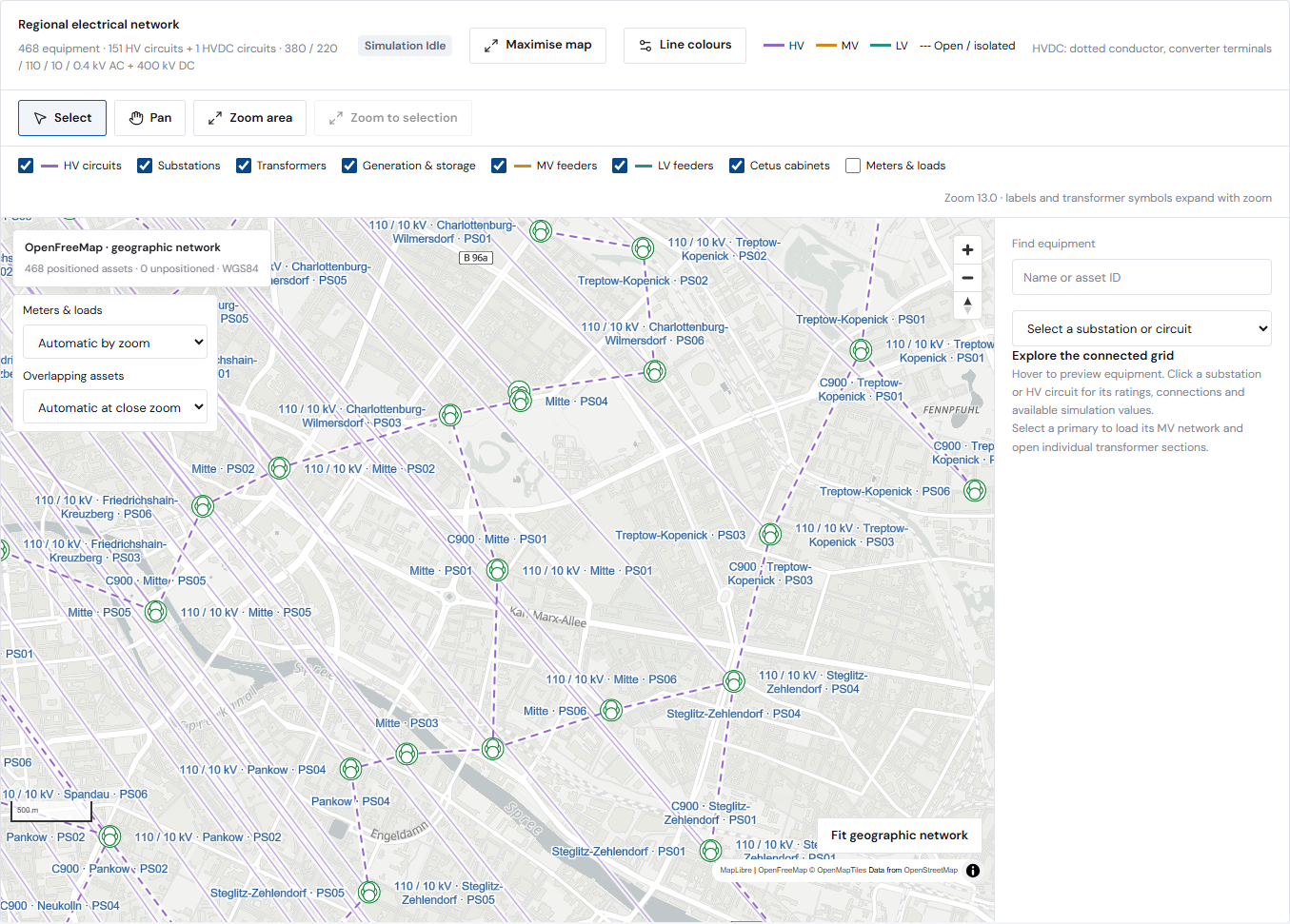
Each operator’s Central installation has its own database, Grid Twin and analysis engine. Agreed information exchanges connect operators; another company’s private system stays private.
Cetus complements existing SCADA and operational tools with equipment context, retained field evidence and coordination across declared boundaries. Interfaces and functions are agreed for each installation.
We help your team agree access, establish its installation and plan updates and support around the way your organisation works.
Engineering in Cetus
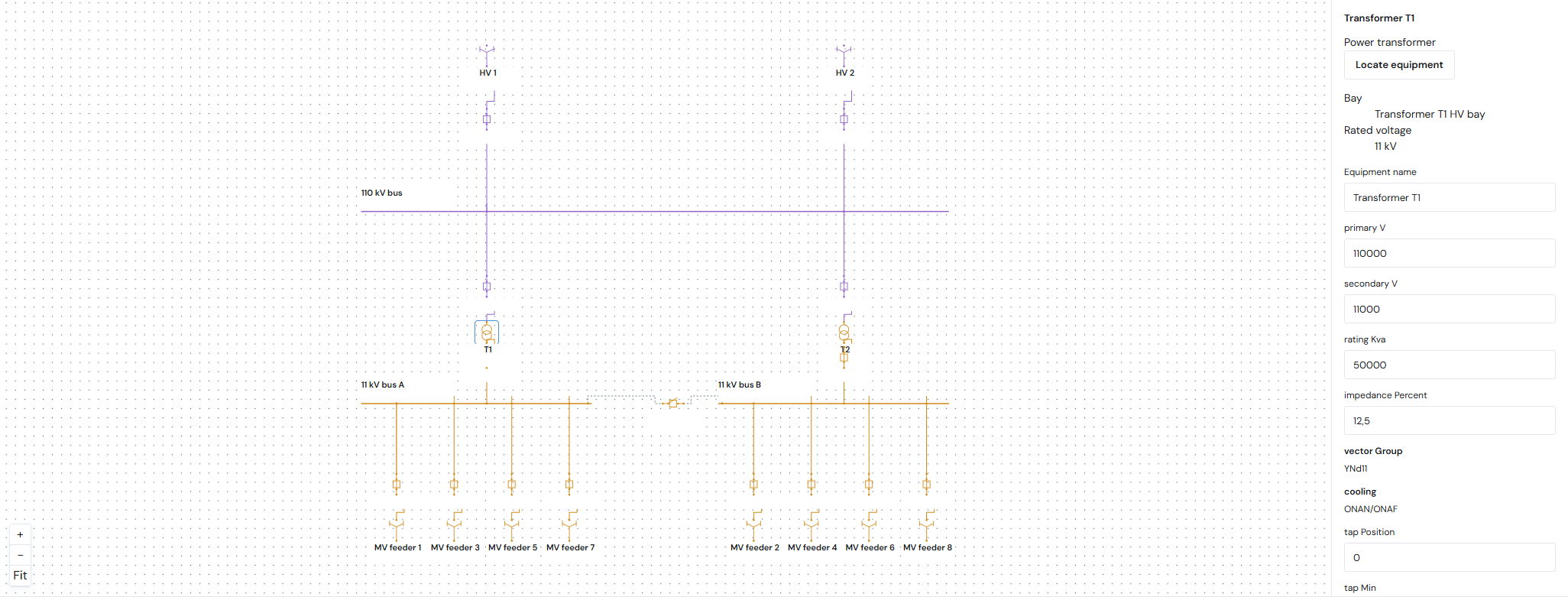
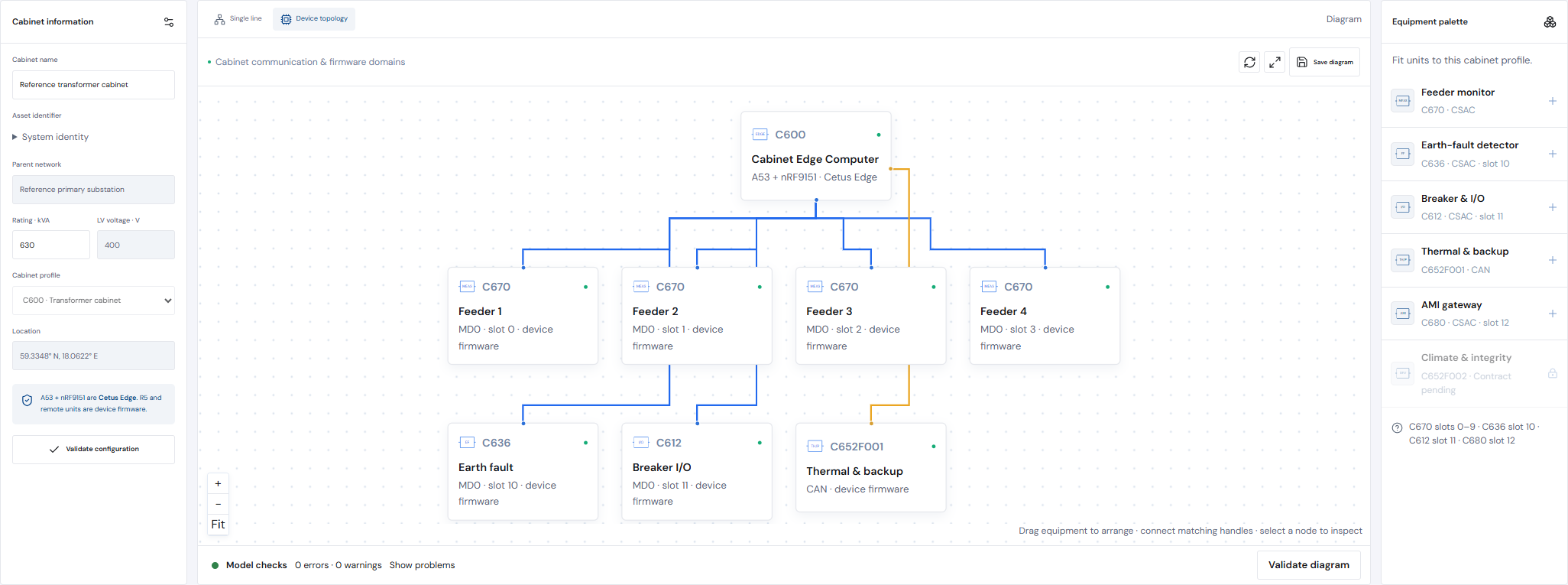
Inspect the electrical arrangement, then work through the equipment and connections inside an individual cabinet.
A clearer perspective
Start with the assets you own, the people who operate them and the decisions they need to make.
See individual feeder conditions, investigate losses and connect outage or maintenance work with the transformer and meters involved.
For DSOs: LV and MV visibility, loading, phase balance, loss investigation and field-work context.
Discuss your networkBring transmission needs together with approved distribution and generation information. Review constraints and capacity-assessment readiness across the agreed boundary.
For TSOs: C-GCC workspaces, declared exchange boundaries and evidence for capacity coordination.
Discuss your networkRelate plant availability to its equipment, connection limits and the receiving network. Share the information needed for coordination while retaining control of your own installation.
For generation companies and IPPs: owned asset context and agreed information exchange.
Discuss your networkStart with your network